

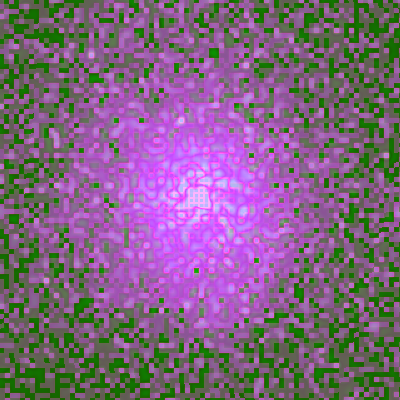
 M87
M87The jet from a black hole.
Forty-seven Chandra obsids merged into one event file. The jet of M87's central engine, lit in photons that travelled fifty-five million years to reach the chip.
Telescopes have been publishing raw frames every night for thirty years. Most of those frames have never been looked at twice. 1snob AstroRoom pulls them from the public archives, stacks them into a single deep exposure, and hands you the controls of a darkroom that knows what year it is.
Built for the curious, written for the working astronomer. Every decision is logged. Every parameter is reversible. The picture you walk out with is yours, and so is the paper trail that proves how you made it.
An image of the sky is the result of a hundred small decisions. Which frames you keep. Which pixels you reject. Which colour you assign to a photon you can't see. Where you crop, what you stretch, what you call signal and what you call dust.
Most software hides those decisions inside an auto mode and outputs a flattened JPEG. 1snob AstroRoom keeps every decision visible, reversible, and yours. We built it because the question that makes science worth doing is never what does the instrument say. It is what do we choose to see, and can we prove how.
Type a name. M31, Crab, M87, Sagittarius A*. 1snob AstroRoom resolves it through SIMBAD TAP — falling back to CDS Sesame if the first try misses — then queries Chandra, MAST, SkyView, XMM, NuSTAR, Swift, INTEGRAL, Suzaku, and Fermi LAT in parallel and pulls back every public frame that overlaps your target.
Not every frame can be added to every other frame. Compat tags each one by epoch, instrument, and band, then groups frames that register cleanly together. You can override every group, but most of the time you don't need to.
Auto · skip-ableFrames cluster around the dates they were observed. Sgr A* has Chandra observations from 1999 to last month. 1snob AstroRoom draws the timeline; you pick the window — a single night, a decade, or the whole archive.
Auto · skip-ableMerge frames into one deep exposure. Reprojected onto a common WCS, sigma-clipped to drop the cosmic-ray hits and the satellite trails, co-added at full bit depth. Pixel-rejection rules are visible, editable, and saved with the result.
Build a 3D cube. The Z-axis can mean six different things — intensity, epoch, band, residual, confidence, or anomaly score — and each mode auto-selects an appropriate transfer function so you read the cube the way it was meant to be read.
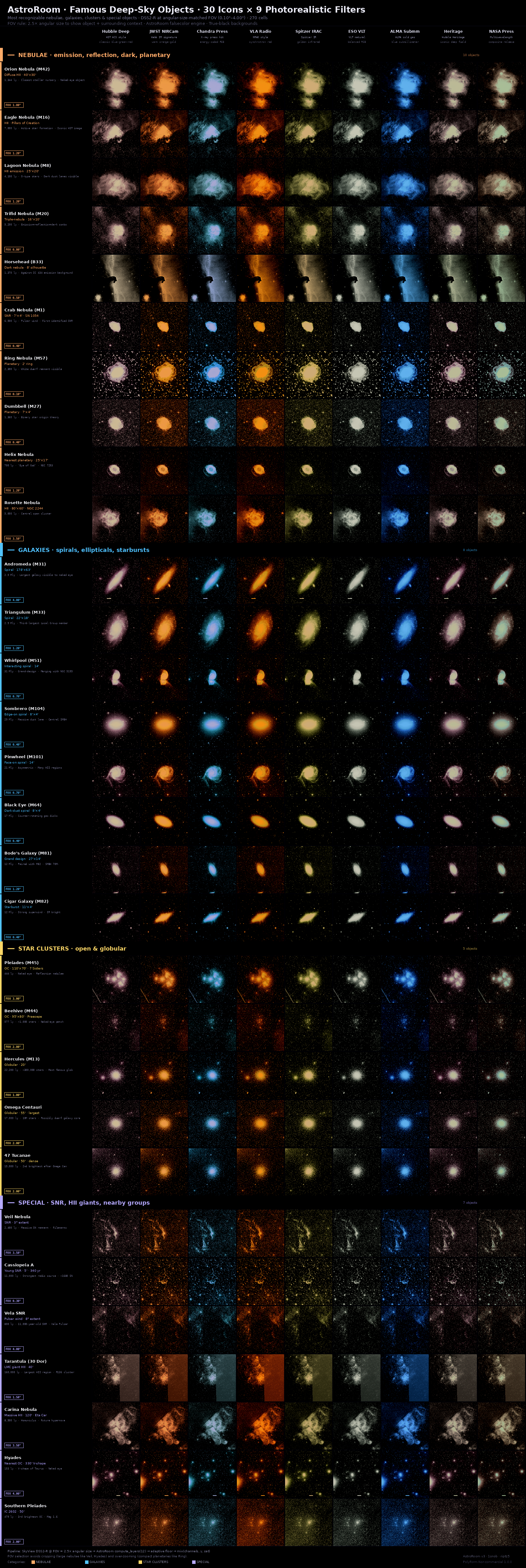
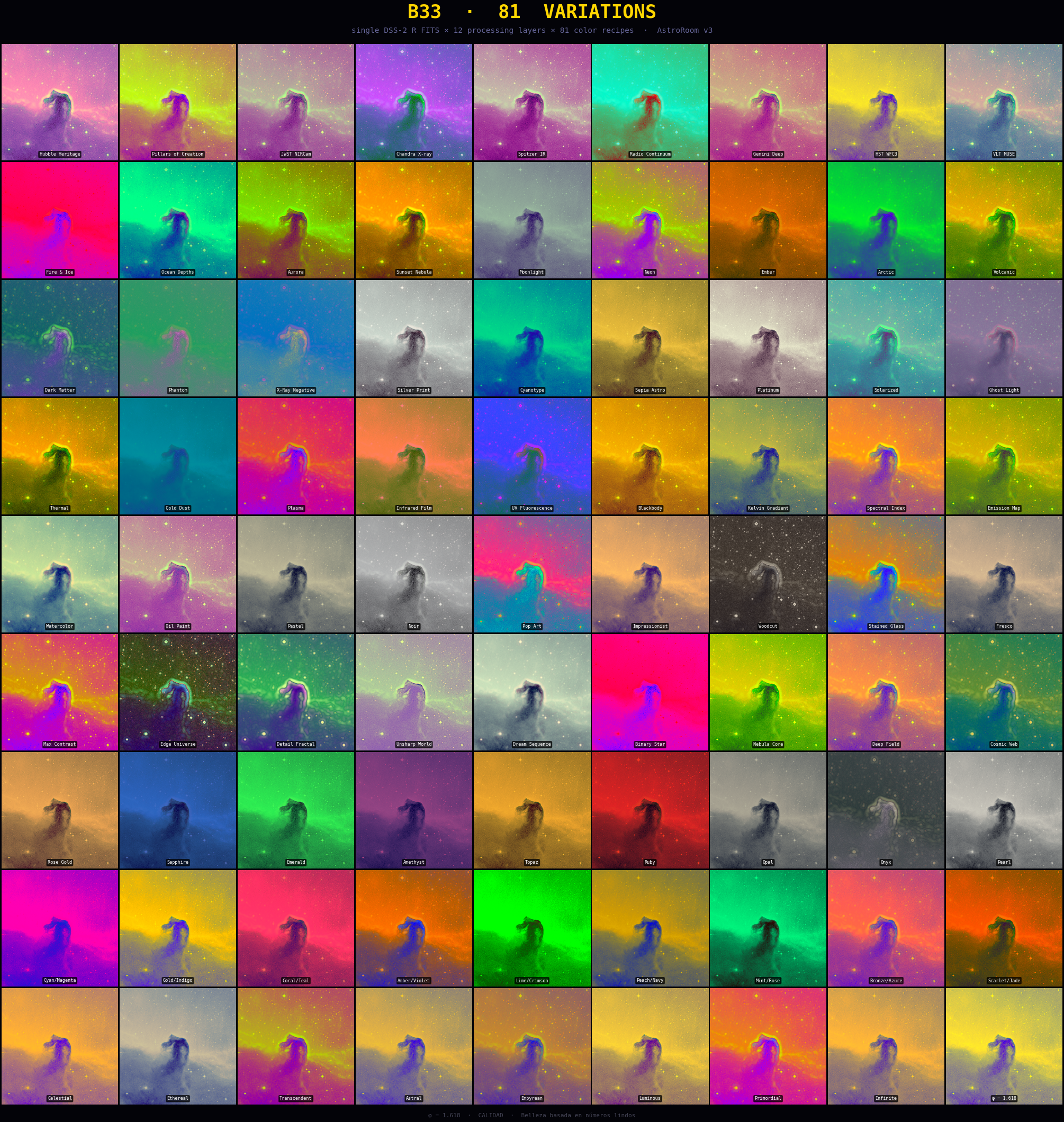
Tone, contrast, curves, false-colour assignment. Non-destructive controls applied to the FITS data itself rather than a flattened preview, the way a darkroom would have done it. The false-colour engine ships eighty-one named recipes across fourteen bands — from gamma to centimetre radio — so your photograph will not look like anyone else's.
Inspect the target across angular scales. The same Sgr A* frame that fits inside one degree of sky also resolves down to the Chandra pixel — about half an arcsecond. The zoom ladder builds every intermediate panel for you.
Export a report. A PDF, a JSON manifest, a Merkle root. Every frame that went in, every parameter you touched, every choice that was automated. Hand it to a referee, hand it to your future self. The picture is no longer just a picture.
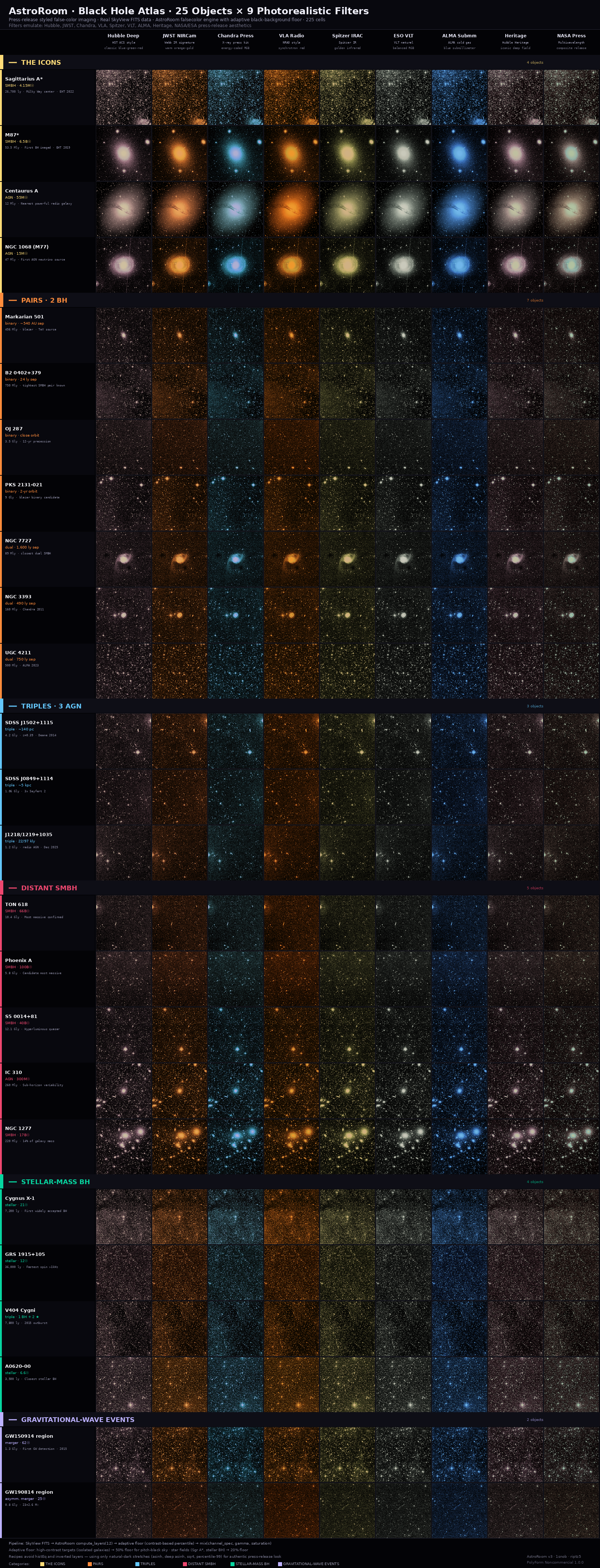
Where the Atlas asks what does this catalogue look like under our recipes, a study asks what does this operation actually do. Recipe matrices, stacking ladders, alpha sweeps, instrument comparisons, 4D reconstructions — each one isolates a single decision and runs it across enough targets that the decision itself is what you read.
backend/app/data/objects.json. Anything else with a name SIMBAD or Sesame recognises is also reachable. 1snob AstroRoom is a name resolver as much as it is a darkroom.
M87Forty-seven Chandra obsids merged into one event file. The jet of M87's central engine, lit in photons that travelled fifty-five million years to reach the chip.
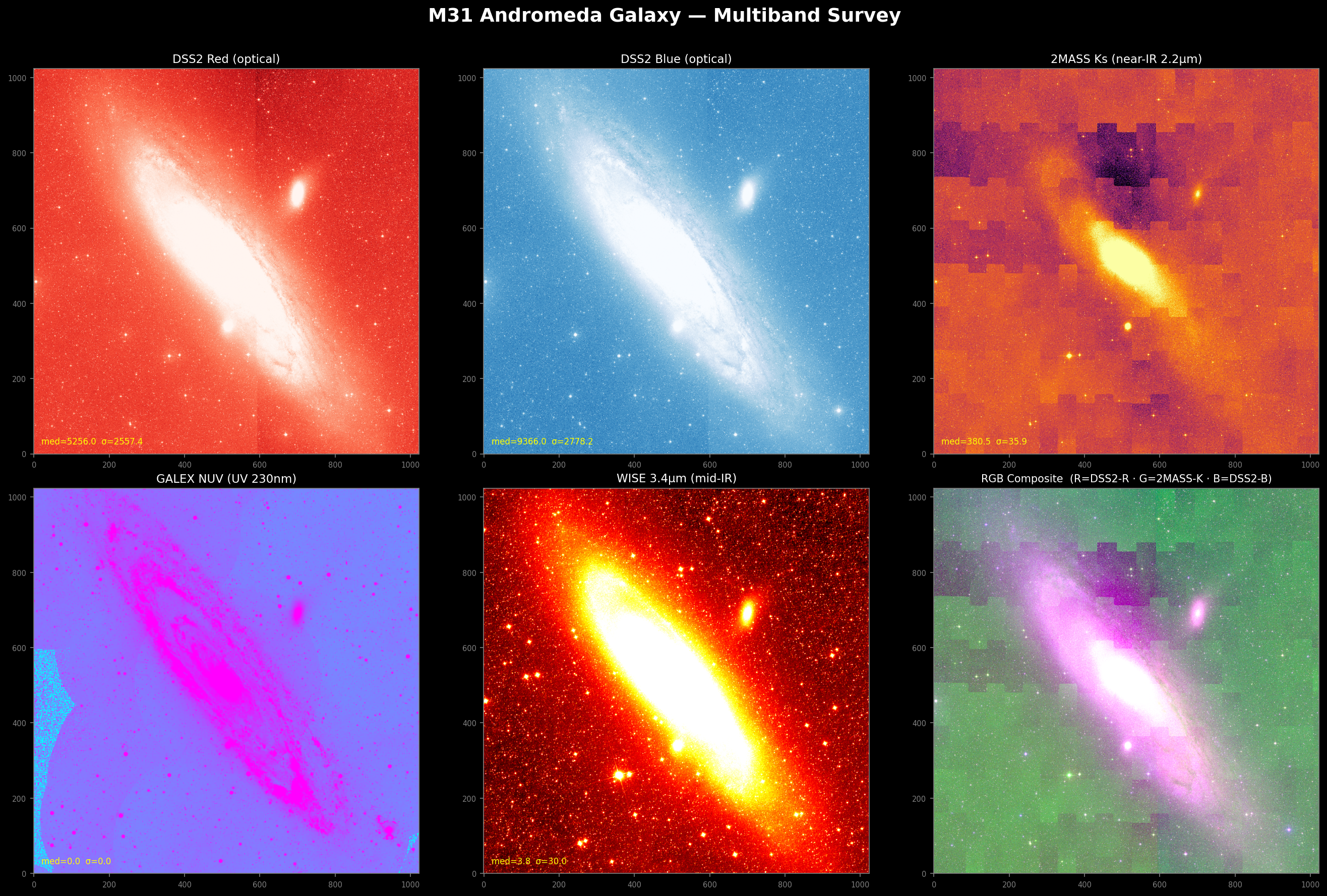 M31
M31A median stack of public archive frames pulled across fourteen nights. The faint dust lanes of the spiral against a field that is, finally, perfectly black.
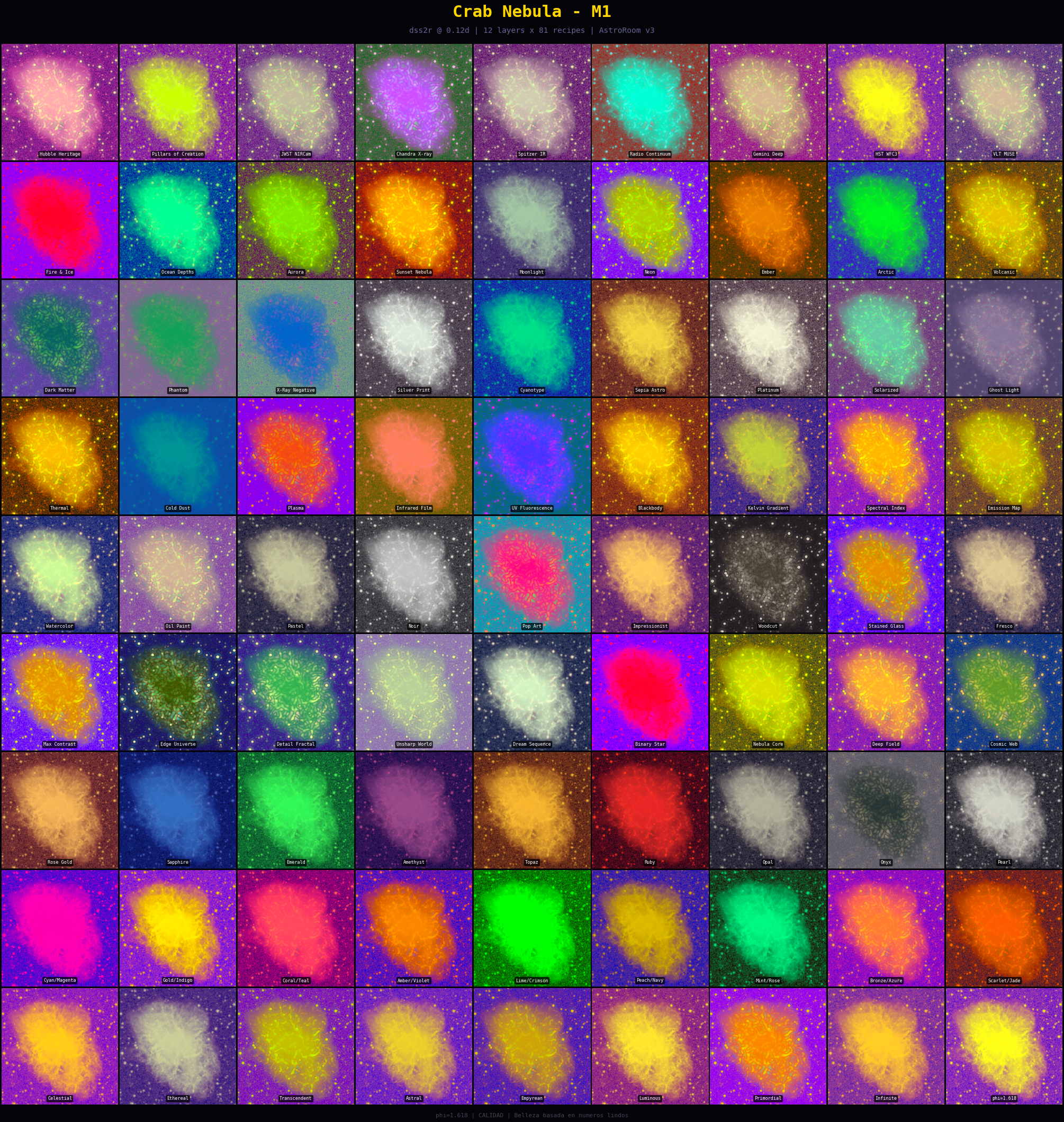 Crab
CrabSynchrotron radiation from the remnant, false-coloured against an optical underlay. The yellow knot at the centre is the corpse of the star that exploded in 1054.
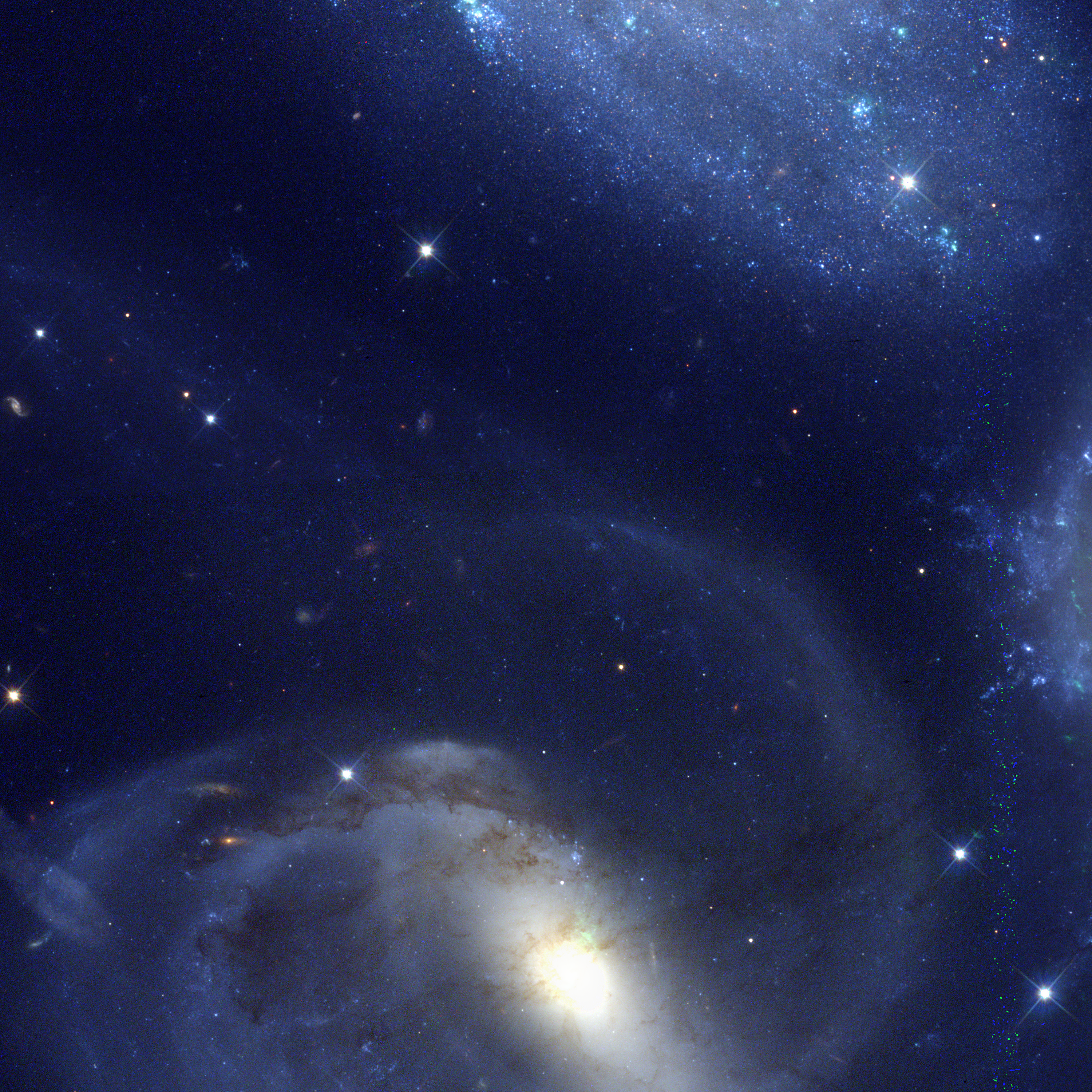
 Cen A
Cen ANGC 5128 in X-ray. The dark band cutting across the disc is a dust lane left over from a galactic merger half a billion years old. The bright nucleus is the AGN feeding the central black hole.
 SQ
SQA megastack of public JWST exposures across NIRCam and MIRI bands. Four of the five are gravitationally bound; one is a foreground impostor.
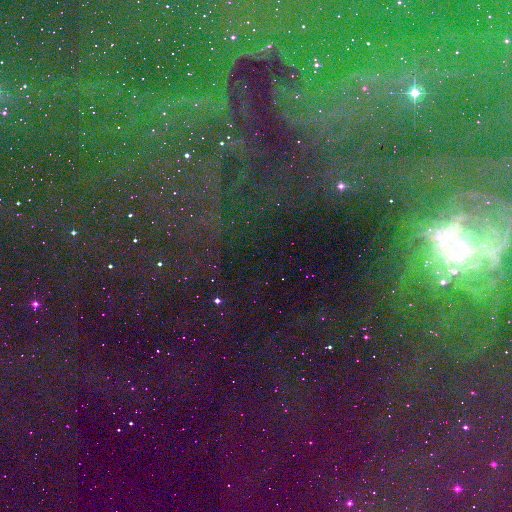
B33Sixteen optical and near-infrared frames stacked into the iconic silhouette. The dust lane reads red against the IC 434 emission in exactly the way the photons asked.
Two formats walk into a frame. One was designed by photographers. One was designed by astronomers. The difference is what they think you're allowed to throw away.
Stacking six hundred frames is not the same thing as a longer one. It is a different operation against a different kind of noise.
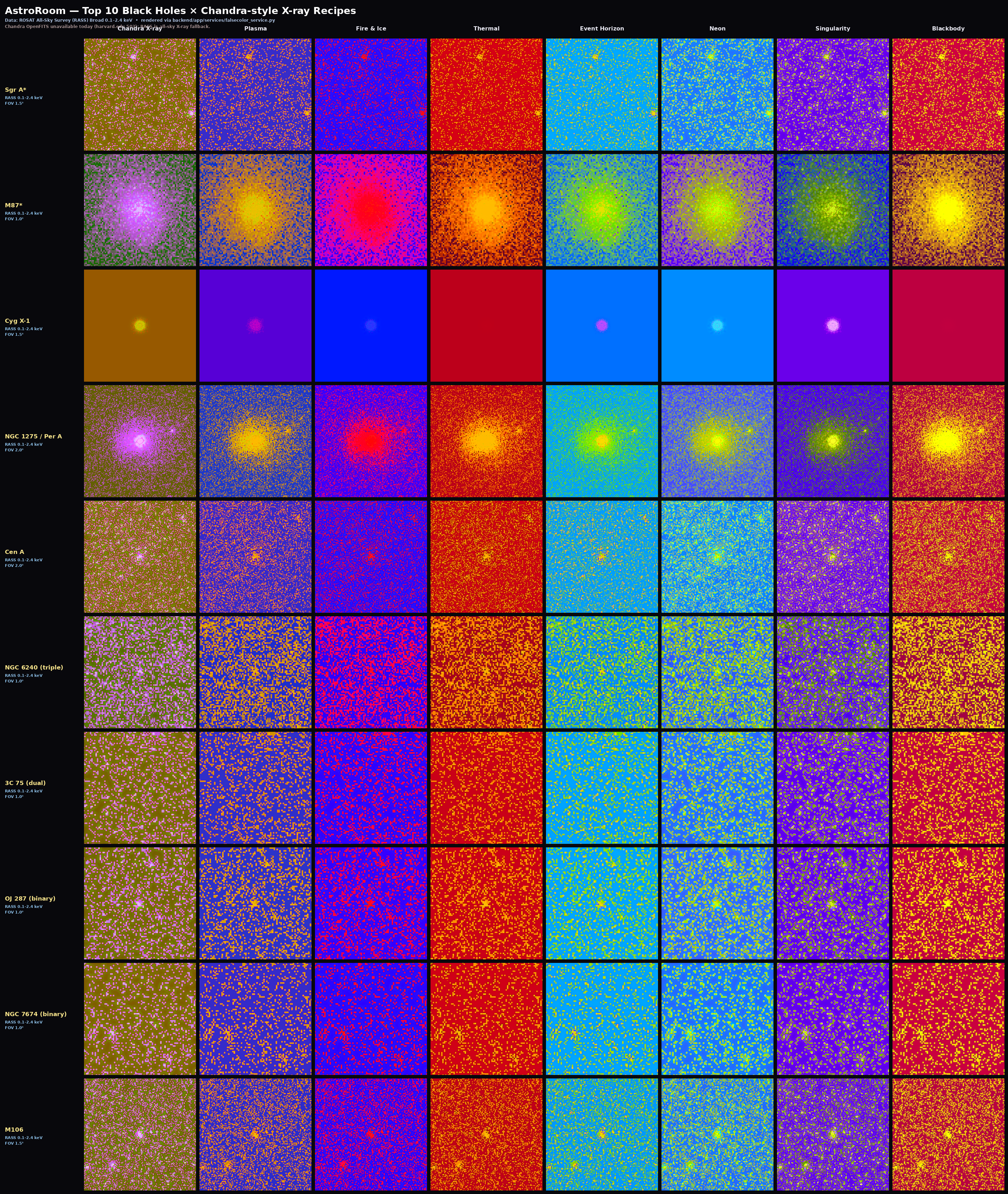
X-rays are invisible. Every published Chandra image is a choice. Here is how the choice gets made, and where the limits are.
A photograph of a galaxy has two spatial dimensions. The galaxy itself has three. 1snob AstroRoom builds the missing one out of what the data actually knows.
Sgr A* does not make a sound. There is no medium between us. The sonification is a translation, with rules. The rules are the point.
Every picture 1snob AstroRoom outputs comes with a chain of hashes. The chain says yes, this is the picture I made, and yes, this is exactly how I made it.
1snob AstroRoom is built by a small team in Niagara, under the 1snob umbrella. We make tools for the moment when scientific data meets a human eye — the moment the question stops being what does the instrument say and starts being what do we choose to see.
The app is free during the public beta. The data is yours. The audit trail is yours. The decisions, especially, are yours. We are uninterested in any arrangement that ends with a flattened JPEG and a credit line.