Building volumes
from flat
images.
A photograph of a galaxy has two spatial dimensions. The galaxy itself has three. 1snob AstroRoom builds the missing one out of what the data actually knows.
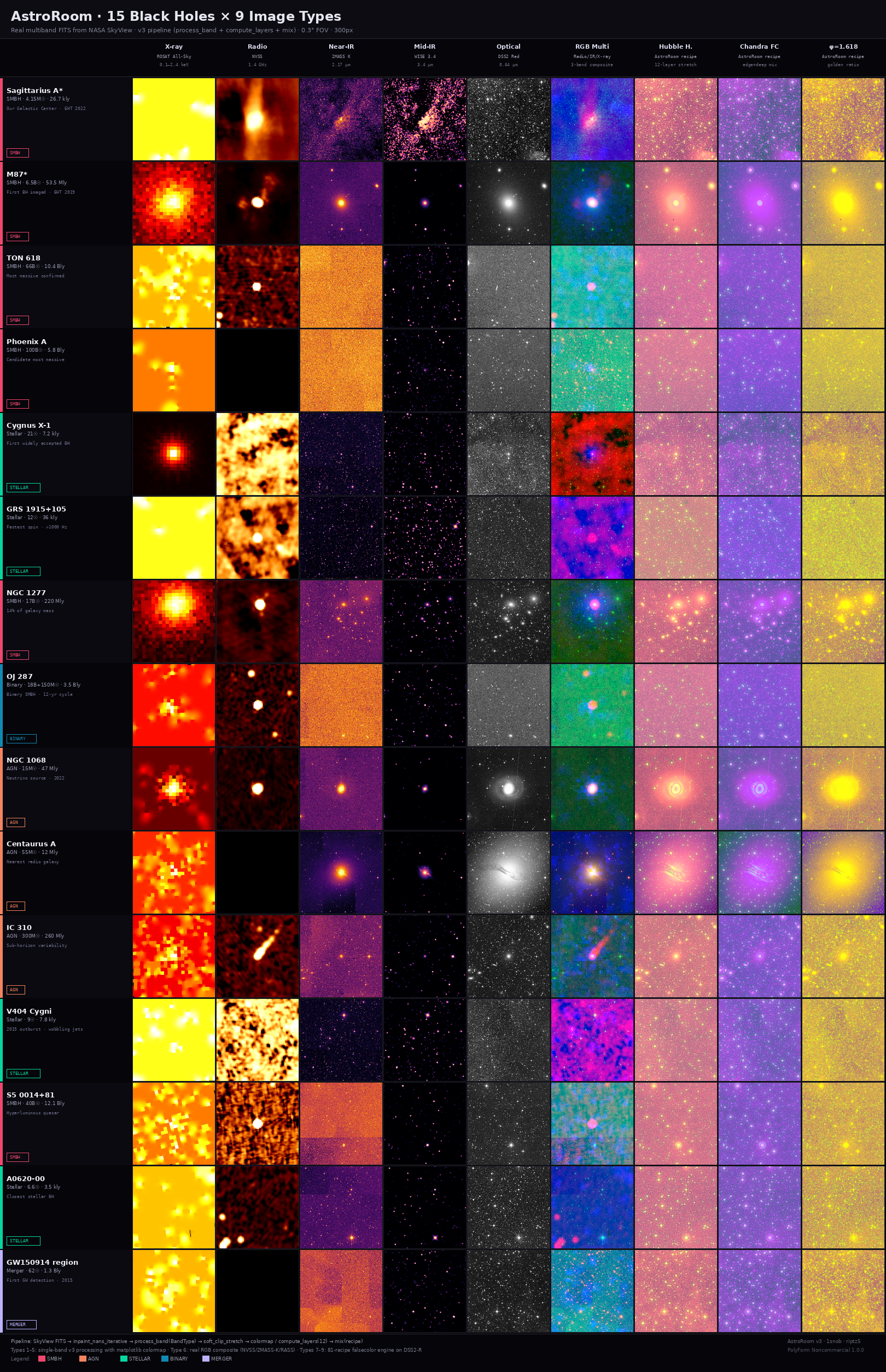
Most of the universe shows up to us as a flat picture. We know it isn't flat. The question is how to build a third dimension that is justified by the measurement, instead of invented for the look of it.
— 01What a flat image already tells you
A two-dimensional astronomical image is not, technically, two-dimensional. Each pixel encodes intensity, which is a function of how much light reached the detector from the line of sight passing through that pixel. Bright pixels are dense in column-density, dim pixels are not. That column-density profile is a depth axis, if you choose to read it as one. 1snob AstroRoom calls this Intensity-Sliced Pseudo-Volume Reconstruction. ISPR. Implementation: backend/app/services/volumetric_service.py — note the ISPR_AXIS3 = INTENSITY header tag in the ISPR_METADATA block.
— 02How ISPR works
ISPR samples the image at multiple intensity windows — say, the brightest 10%, the next 20%, the next 30%, and the diffuse remainder — and stacks those slices into a pseudo-volume. The brightest slice forms the inner core. The next surrounds it. The diffuse remainder is the outer shell. The result is not the galaxy in three real dimensions. It is the galaxy's intensity structure in three constructed dimensions. You can rotate it, slice it, export it as STL or OBJ for a 3D printer, hand a physical model to a child.
— 03How 1snob AstroRoom labels what the Z-axis means
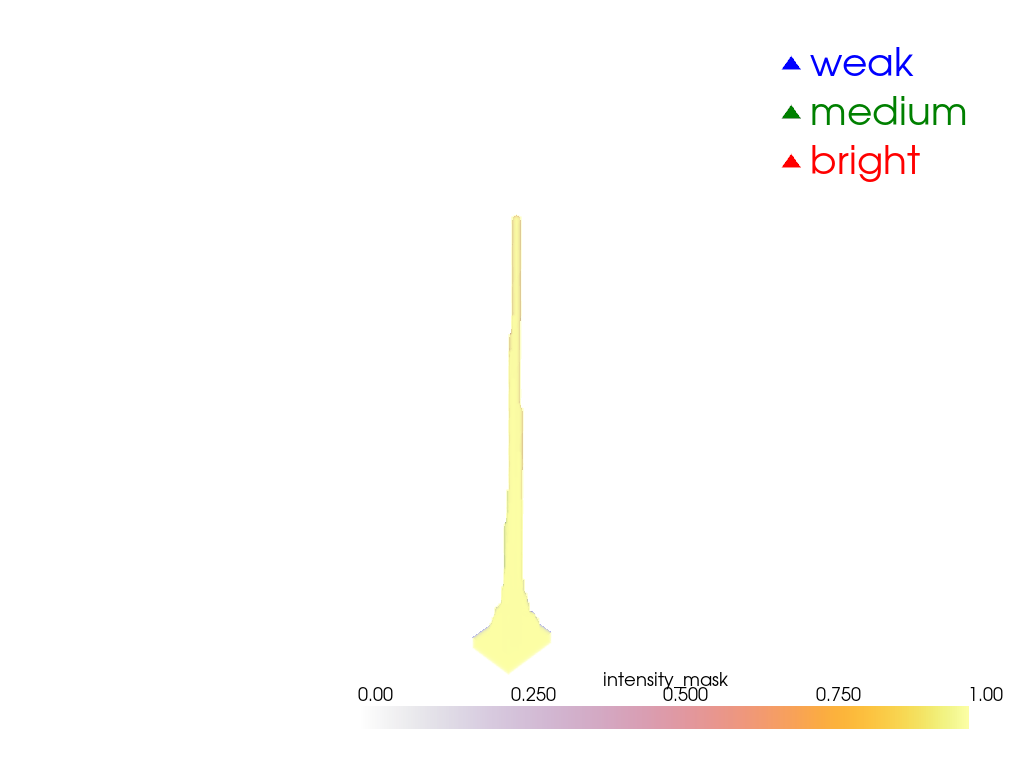
The Z-axis can mean six different things, and 1snob AstroRoom is explicit about which one is in use. The ISPR header writes it down: ISPR_AXIS3 is set to one of INTENSITY, EPOCH, CHANNEL, RESIDUAL, CONFIDENCE, or ANOMALY. Each mode auto-selects an appropriate transfer function — a diverging map for residual and anomaly (because those have a meaningful zero), viridis for confidence (because zero-to-one is a familiar scale). Reading a 3D cube without knowing what its Z-axis means is the kind of mistake you make once.
— 04What the volumes are for
Three things, in order of how often we use them. First, interpretation: a rotatable cube reveals structures that the flat image hides — a foreground star projected onto a galaxy disc separates out, a dust lane shows its geometry. Second, publication: a 3D figure inside a journal article, a fulldome animation, a museum exhibit. Third, teaching: a printed STL of a nebula in a classroom is a different teaching tool than a flat photograph, and we have not exhausted what it is good for.
— 05Where the limits are
ISPR is honest about what it is. It does not produce a tomographic reconstruction in the medical-imaging sense. We don't have the line-of-sight information that a CT scanner has. The Z-axis is constructed, and the ISPR metadata says so on the cube itself. Anyone who reads the file knows they are looking at a pseudo-volume, not a measurement of distance. This is non-negotiable. A 3D model whose Z-axis is undocumented is a beautiful lie.