What we mean
by a "deep"
exposure.
Stacking six hundred frames is not the same thing as a longer one. It is a different operation against a different kind of noise.
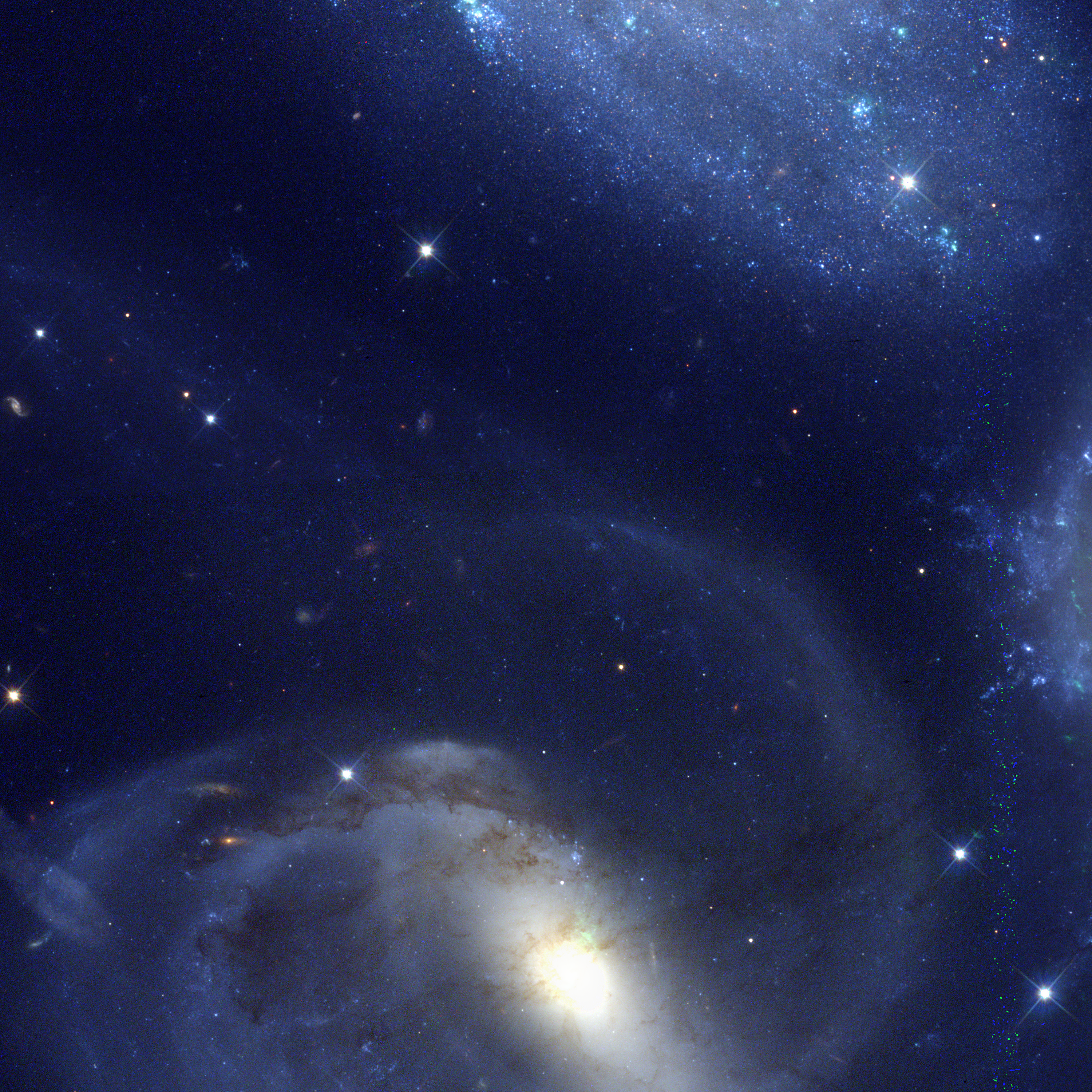
Astronomers say deep the way photographers say long. The two words don't mean the same thing. A long exposure collects more light by leaving the shutter open. A deep exposure collects more light by adding shutters together — and gets something the long exposure cannot.
— 01The thing about photons
Light from a faint galaxy arrives one photon at a time, more or less at random. The arrival rate has a Poisson distribution: variance equals the mean. Every detector reads out with some electronic noise floor underneath that — read noise, dark current, thermal background. Whether you can see the galaxy at all depends on whether the photon rate over a useful integration time stands above that noise floor. Deep means clear of the floor.
— 02Why a longer exposure isn't always the answer
You could collect more photons by exposing for an hour instead of a minute. Sometimes you can't. The instrument has a maximum readout time. The bright parts of the field saturate. A satellite crosses the frame. The sky itself glows in the infrared. A real telescope produces dozens of short exposures of the same target, scheduled across hours or nights, each one ending before something goes wrong.
— 03How 1snob AstroRoom stacks them
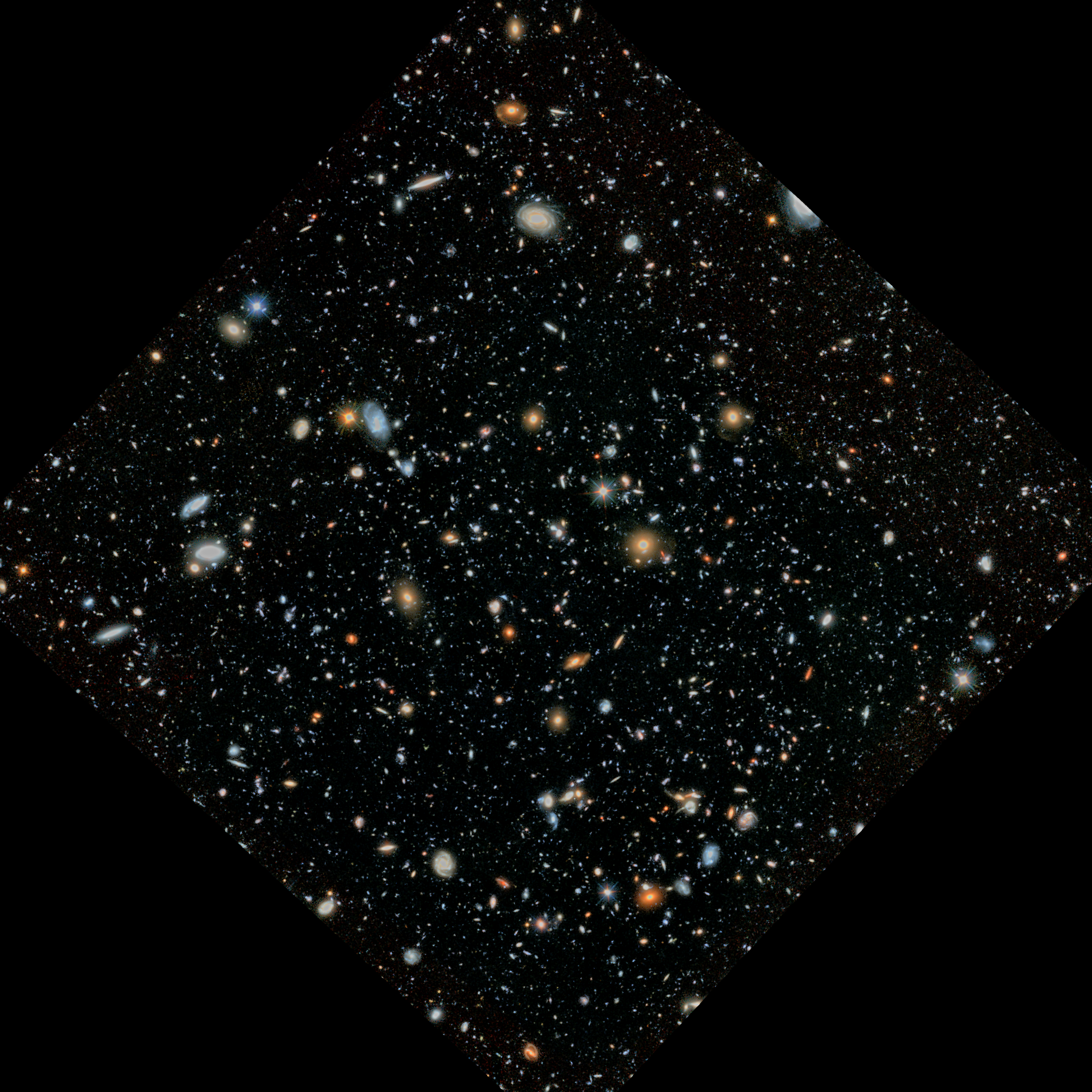
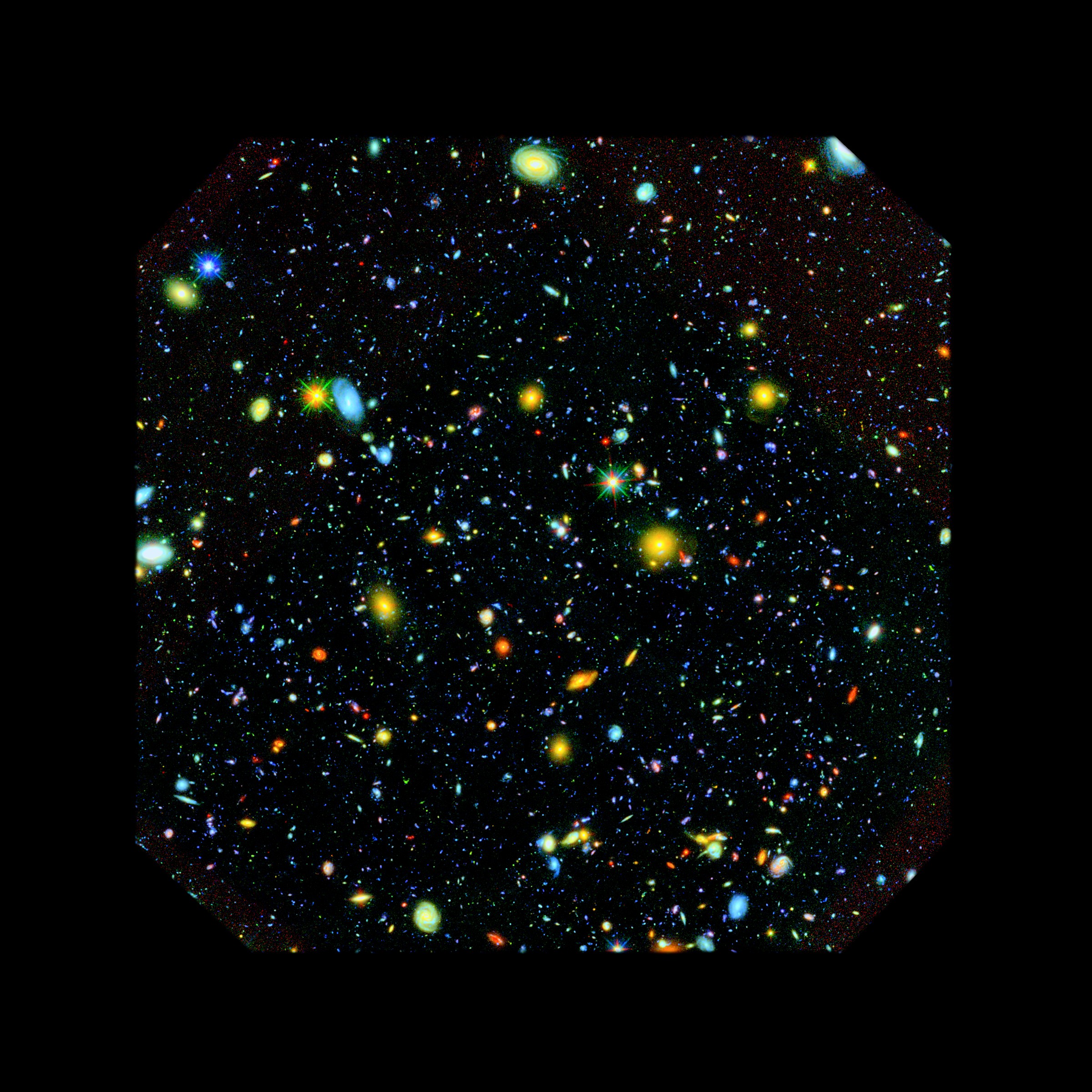
Stacking is the operation that turns those many short exposures into one deep one. 1snob AstroRoom reprojects every frame onto a common World Coordinate System grid using the WCS in each FITS header — pixel positions get nudged fractions of a pixel until each star is in the same place across every frame. The stack itself is a per-pixel statistic. The default is sigma-clip co-addition: at each pixel, the values from all frames are sorted, the ones more than n sigma from the median are dropped, and the rest are averaged. The implementation is in backend/app/services/stacking_service.py — Astropy WCS plus scipy, both sigma-clip and simple-mean modes available.
— 04What sigma-clip removes
Cosmic rays hit the detector during the exposure and leave a sharp, saturated streak that's there in one frame and gone in the next forty-nine. Satellites cross the field. Hot pixels misbehave on one chip and not the others. Sigma-clipping notices that those values are far from the median of the same pixel across the stack and quietly drops them. The picture that comes out is what was consistently there.
— 05Why this matters for the picture
A single ten-minute Chandra exposure of Sgr A* is mostly noise. A stack of fifty ten-minute exposures, sigma-clipped onto a common WCS, is a deep exposure of Sgr A*. The structures that appear in the stacked image — the arc of the bow-shock, the diffuse halo, the faint feature you couldn't explain — only appear because they were there in every frame. A long exposure could not separate them from the cosmic-ray contamination. The stack can.